Jabari Blick Avatar
Verified Author

Jabari Blick

Artisan craft specialist, master maker, and workshop educator at HowThingsWorking.xyz. Dedicated to traditional craftsmanship, ceramic science, woodworking, and sustainable studio arts.

How Traffic Lights Coordinate Sensors, Timers, and the Green Wave Effect
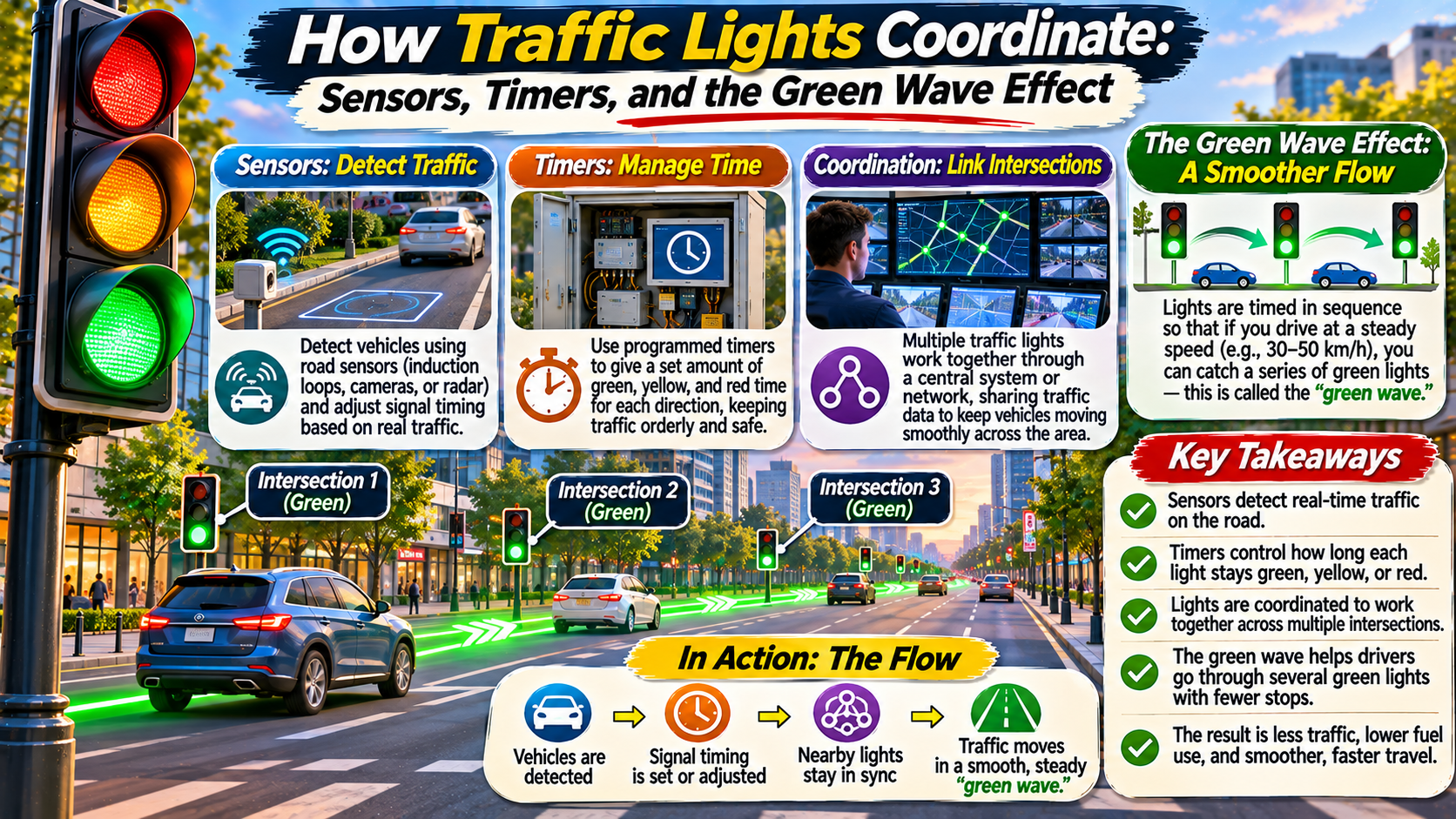
URBAN TRAFFIC ENGINEERING LAB / TRANSPORT SYSTEMS The Hidden Timing Systems Behind Moving Traffic Discover how modern intersections detect vehicles, manage competing movements, and synchronize green lights to keep roads operating safely and efficiently. VEHICLE DETECTION SIGNAL TIMING GREEN WAVES Have you ever driven along a city road and passed through several green traffic lights … Read more
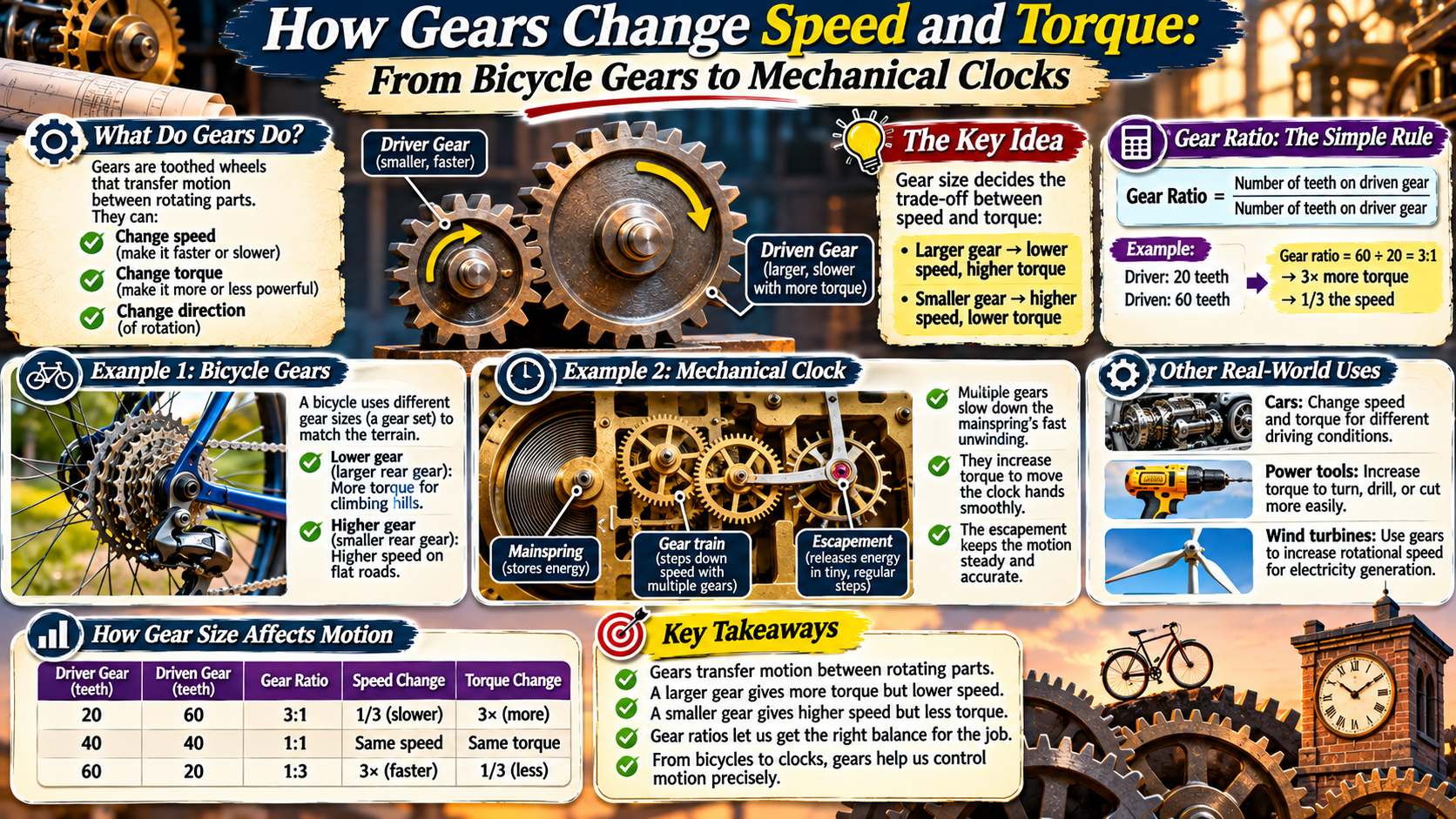
How Gears Change Speed and Torque From Bicycle Gears to Mechanical Clocks

MECHANICAL ENGINEERING / MOTION & POWER The Mechanics Behind Every Turning Gear Discover how interlocking teeth control rotational speed, multiply torque, and transfer motion through bicycles, clocks, machines, and everyday mechanisms. GEAR RATIOS ROTATIONAL SPEED TORQUE Gears are among the most useful inventions in mechanical engineering. They appear in bicycles, mechanical clocks, automobile transmissions, industrial … Read more

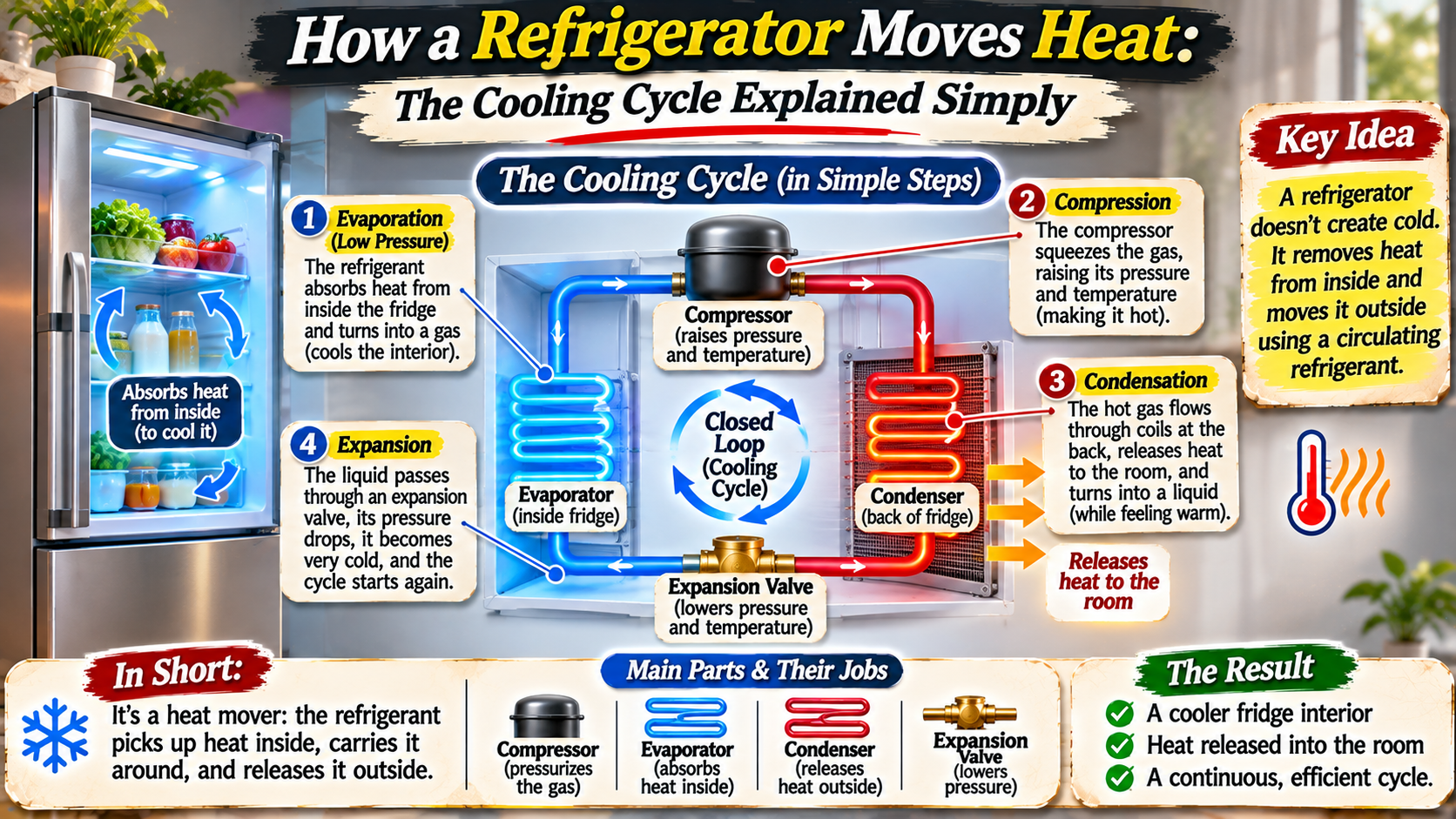
How a Refrigerator Moves Heat The Cooling Cycle Explained Simply

APPLIANCE ENGINEERING LAB · EVERYDAY SCIENCE A Refrigerator Doesn’t Create Cold. It Moves Heat. Explore the surprisingly clever system that keeps food cold by carrying heat from inside your refrigerator into the surrounding room. COMPRESSOR CONDENSER EVAPORATOR Open your refrigerator, and you immediately feel cool air. Food stays fresh longer, drinks remain chilled, and frozen … Read more

Why Bridges Have Expansion Joints The Engineering Behind Those Gaps

STRUCTURAL ENGINEERING / BRIDGE DESIGN FIELD NOTES The Small Gaps That Help Keep Bridges Safe Explore how expansion joints accommodate temperature changes, structural movement, traffic loads, and other forces acting on bridges. THERMAL EXPANSION STRUCTURAL MOVEMENT BRIDGE MAINTENANCE Driving across a bridge, you may notice a brief bump or hear a rhythmic sound as your … Read more

How LED Lights Produce Illumination: Electroluminescence, Bandgap Physics, and Phosphor Down-Conversion

The Lighting Revolution: Banishing the Incandescent Fire For more than 130 years after Thomas Edison commercialized the incandescent light bulb in 1879, human civilization illuminated the night through a crude, brutally inefficient physical process: Thermal Incandescence. An electric current was forced through a hair-thin coiled filament of tungsten metal, heating it to an incandescent white-hot … Read more

The Mechanical Engineering of the Lock and Key: Pin Tumblers, Shear Lines, and Master Keying

The Guardians of Private Property: The 4,000-Year Mechanical Secret Slide a small serrated blade of nickel-plated brass into a keyhole, give it a gentle sixty-degree twist, and hear a satisfying, solid mechanical clunk as a heavy deadbolt retracts from the doorframe. You step inside your private sanctuary, pull the door shut, and turn the thumbturn: … Read more

How Barcodes and QR Codes Store Data: Optical Reflection, Reed-Solomon Error Correction, and Laser Scanners

The Universal Language of Black and White On June 26, 1974, at a Marsh Supermarket in Troy, Ohio, a cashier named Sharon Buchanan slid a ten-pack of Wrigley’s Juicy Fruit chewing gum across an optical glass window set into the checkout counter. A red helium-neon laser beam flickered across a small pattern of black and … Read more

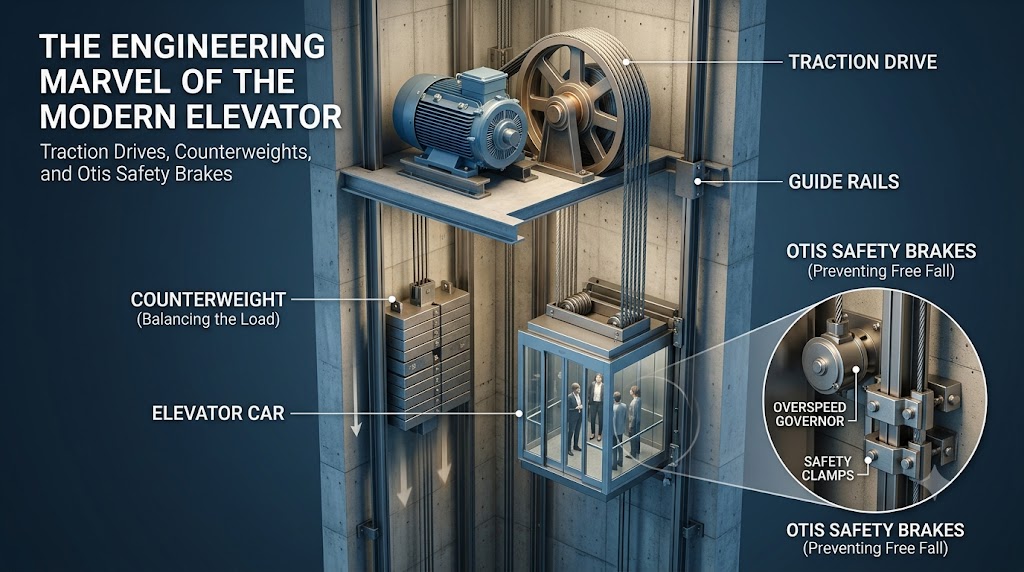
The Engineering Marvel of the Modern Elevator: Traction Drives, Counterweights, and Otis Safety Brakes

The Machine That Built the Vertical Metropolis Before the middle of the nineteenth century, the architectural horizon of human civilization was strictly constrained by a biological reality: the endurance of human leg muscles. Throughout ancient Rome, medieval Paris, and nineteenth-century London, residential and commercial buildings rarely exceeded five or six stories in height. Renting the … Read more

How Touchscreens Actually Work: Mutual Capacitance, Indium Tin Oxide, and Controller IC Scans

The Disappearance of the Physical Button Every single day, across the modern digital landscape, human beings tap, swipe, pinch, and scroll their fingers across cold, glassy surfaces hundreds of billions of times. We unlock mobile phones with a thumbprint touch, zoom into high-resolution satellite maps with a two-finger spread, swipe through transit payment terminals, and … Read more

The Mechanical Physics of the Bicycle: Gear Ratios, Gyroscopic Stability, and Freewheel Ratchets

The Most Energy-Efficient Machine in Human History In the vast pantheon of mechanical contraptions invented by human civilization, nothing surpasses the sublime, elegant efficiency of the Bicycle. When evaluated on the thermodynamic metric of energy cost of transport—the mechanical energy in calories required to move one kilogram of mass across one kilometer of distance—a human … Read more