The Continental Machine: The Largest Interconnected Network on Earth
Flip a small plastic toggle switch on your living room wall, and an electric lamp illuminates your room in less than a microsecond. You do not wonder where that electricity came from; you take it as an absolute certainty that electrical power will flow with unwavering, effortless perfection. Yet behind that simple light switch sits what the United States National Academy of Engineering declared to be the single greatest engineering achievement of the 20th century: The Continental Electric Power Grid.
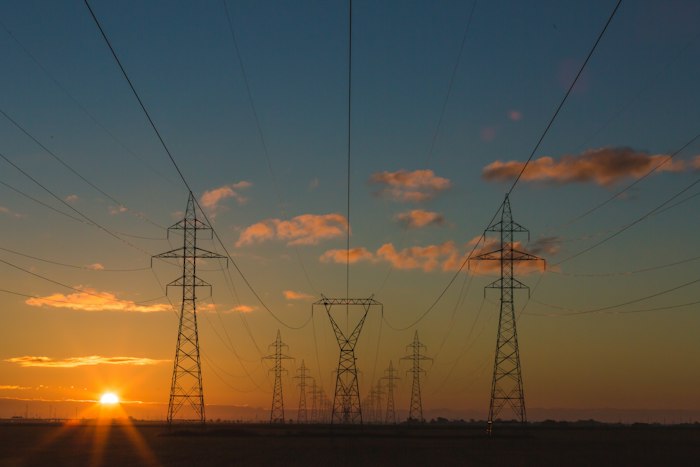
The electric grid is not merely a collection of wires; it is a single, continent-spanning, synchronous kinetic machine operating across millions of square miles. Across the North American Eastern Interconnection or the Synchronous Grid of Continental Europe, thousands of colossal steam turbines, hydroelectric dams, nuclear reactors, wind farms, and solar installations are physically and electromagnetically locked together, spinning at the exact same synchronized frequency of 60.000 Hertz (or 50.000 Hz in Europe) in relentless lockstep.
Furthermore, because high-capacity electrical storage has historically been limited, the electric power grid operates on a knife-edge physical reality: Electricity must be generated, transmitted, and consumed at the exact speed of light in real-time thermodynamic balance! If consumer demand exceeds power plant generation by even a fraction of a percent, the frequency of the entire continental machine begins to decelerate, threatening catastrophic cascading blackouts. In this comprehensive electrical engineering masterclass, we explore three-phase alternating current physics, Faraday transformer induction, ultra-high-voltage transmission loss equations, High-Voltage Direct Current (HVDC) lines, sulfur hexafluoride switchgear, and the millihertz frequency balancing that keeps continental civilization illuminated.
💡 The War of the Currents: Tesla vs Edison
‘In the late 1880s, Thomas Edison championed Direct Current (DC), while Nikola Tesla and George Westinghouse championed Alternating Current (AC). Edison\’s low-voltage DC could travel only one mile before wire resistance dropped voltage to useless levels. Tesla won the War of the Currents because AC can be stepped up to hundreds of thousands of volts using passive transformers, slashing transmission losses by over 99%!’
Three-Phase Alternating Current: Nikola Tesla’s Polyphase Symphony
Why is commercial electrical power generated, transmitted, and distributed globally as Three-Phase Alternating Current (AC) rather than single-phase electricity?
The answer resides in the mathematical elegance of polyphase geometry, formulated in 1887 by Nikola Tesla:
- Continuous Constant Power Delivery: In a single-phase AC circuit, voltage and current oscillate sinusoidally through zero 120 times every second (at 60 Hz). Consequently, instantaneous power drops to zero 120 times per second! In a three-phase system, three independent alternating voltage waveforms are generated simultaneously, each separated by an electrical phase angle of exactly 120 degrees (2pi / 3 radians):
- Conductor Material Savings: In a balanced three-phase load, the algebraic sum of the three return currents is always mathematically zero (I_A + I_B + I_C = 0). Consequently, a three-phase transmission line requires zero neutral return wire! Three wires can transmit three times the power of a two-wire single-phase circuit, saving over 25% of total copper and aluminum metal across thousands of miles of transmission corridors.
V_A(t) = V_pk * sin(omega * t)
V_B(t) = V_pk * sin(omega * t - 120 deg)
V_C(t) = V_pk * sin(omega * t - 240 deg)
When you sum the instantaneous power delivered across all three phases, a mathematical miracle occurs: the oscillations cancel each other out completely! Three-phase systems deliver 100% constant, smooth, vibration-free mechanical power to heavy industrial electric motors.
| Grid Transmission Hierarchy | Operating Voltage Level | Primary Physical Component | Governing Electrical Law | Operational Grid Purpose |
|---|---|---|---|---|
| Generation Station | 13.8 kV to 24 kV AC | Synchronous turbogenerators (water/steam) | Faraday’s Law: EMF = -N * (dPhi / dt) | Converts mechanical turbine rotation to raw 3-phase AC power |
| Step-Up Substation | 230 kV to 765 kV AC (UHV) | Giant oil-immersed step-up power transformers | Transformer Turns Ratio: V_s / V_p = N_s / N_p | Boosts voltage up to 765 kV to slash Joule heating line losses |
| High-Voltage Transmission | 115 kV to 765 kV AC | Steel-lattice towers with aluminum conductor steel-reinforced (ACSR) | Joule Heating Loss: P_loss = I^2 * R = (P^2 * R) / V^2 | Transports bulk gigawatts across hundreds of miles across states |
| HVDC Interties | ±500 kV to ±1,100 kV DC | Line-commutated converter (LCC) / VSC stations | Zero reactive power capacitance loss: P = V * I | Transmits gigawatts undersea (>50 km) or across asynchronous interconnections |
| Substation Switchgear (GIS) | 115 kV to 500 kV AC | Sulfur Hexafluoride (SF6) gas insulated breakers | Electronegative dielectric gas arc extinction | Clears 63,000-Ampere short-circuit faults in 30 milliseconds |
| Neighborhood Pole Transformer | 120 V / 240 V Split-Phase AC | Cylindrical oil-cooled pole ‘can’ transformer | Center-tapped secondary winding (120V line-to-neutral; 240V line-to-line) | Delivers safe residential power for household lighting and heavy appliances |
The Step-Up Transformer: Conquering the Joule Heating Law
The single greatest obstacle to transmitting electrical energy over long distances is the Joule Heating Loss Law:
P_loss = I^2 * R
Where $I$ is electrical current in Amperes, and $R$ is the electrical resistance of the long metal transmission wire. Notice that transmission power loss scales with the Square of the Current ($I^2$)! If you double the current, line losses increase by four times; increase current tenfold, and line losses spike by a factor of one hundred.
Electrical power transmitted across a three-phase line is defined by:
Power = sqrt(3) * Voltage * Current * cos(theta)
To transmit a fixed quantity of power (e.g., 1,000 Megawatts), engineers have a critical mathematical choice: they can transmit power at low voltage and colossal current, or at ultra-high voltage and microscopic current.
By using giant Step-Up Transformers at the power plant, generation voltage (20,000 Volts) is stepped up to 500,000 Volts (500 kV)—a 25-fold increase in voltage! According to the conservation of energy, stepping voltage up by 25 times forces current to drop by 25 times. And because losses scale with $I^2$, line losses drop by $25^2$—a monumental 99.84% reduction in wasted heat energy! Without high-voltage transformers, power plants would have to be located every two miles inside dense urban neighborhoods.
⚡ Faraday’s Mutual Induction in Transformers
‘A massive 500-kV power grid transformer has ZERO moving mechanical parts. Inside a steel tank filled with thousands of gallons of mineral cooling oil, primary copper coils and secondary copper coils are wrapped around a magnetic core made of grain-oriented silicon steel. Alternating current in the primary creates an oscillating magnetic flux, inducing high-voltage electricity in the secondary purely through Faraday\’s Law of Electromagnetic Induction!’
High-Voltage Direct Current (HVDC): Subsea Cables and Asynchronous Links
While AC reigns supreme for regional distribution, it hits a severe physical barrier when transmitting power across long underground or subsea cable routes exceeding 50 kilometers: Capacitive Charging Currents.
An AC insulated cable surrounded by seawater acts as a giant electrical capacitor. With every 60-Hz cycle, electrical energy flows continuously into and out of the cable’s electrostatic insulation field. In subsea cables longer than 50 km, this reactive charging current absorbs 100% of the cable’s thermal ampacity, leaving zero capacity to carry useful power!
To conquer this, electrical transmission engineers deploy High-Voltage Direct Current (HVDC):
- Zero Capacitive Reactive Loss: Because DC voltage does not alternate, cable capacitance charges once at startup and remains static. HVDC cables can transmit thousands of megawatts across hundreds of miles of deep ocean seabed (e.g., connecting offshore North Sea wind farms to mainland Europe) with near-zero dielectric loss.
- Asynchronous Grid Interconnections: The Eastern and Western Interconnections of North America operate at the same nominal 60 Hz frequency, but their phase angles drift independently and cannot be joined with direct AC wires without triggering massive circulating fault currents. HVDC converter stations act as an asynchronous electronic firebreak: converting Eastern AC to DC, and inverting DC back into synchronized Western AC across state borders.
Grid Frequency Balancing: The 60-Hertz Kinetic Equilibrium
The most dramatic physical reality of the modern electric power grid is that it operates with near-zero energy storage buffer: Every watt of electricity consumed by a toaster in New York must be generated simultaneously by a generator in Pennsylvania at that exact millisecond.
The universal health barometer of the entire continental grid is the Grid Frequency (60.000 Hz):
- The Kinetic Flywheel of Civilization: Across the grid, thousands of massive steam turbine rotors (each weighing up to 100 tons and spinning at 3,600 RPM) store enormous amounts of rotational kinetic energy (known as Grid Inertia).
- When Consumer Demand Exceeds Generation ($P_{load} > P_{gen}$): If millions of people turn on air conditioners on a hot afternoon, the extra electrical load acts as an electromagnetic brake on the spinning generators. The massive steel rotors begin to physically slow down! Grid frequency drifts downward from 60.000 Hz to 59.950 Hz.
- When Generation Exceeds Demand ($P_{gen} > P_{load}$): If factories shut down at 5 PM, excess steam pushes the turbine blades with less resistance. The generators accelerate, and grid frequency creeps upward toward 60.050 Hz.
- The Automated Frequency Response Hierarchy:
- Primary Frequency Response (0 to 10 seconds): Mechanical turbine governor valves detect rotational deceleration and automatically open steam/water valves to arrest frequency drops using stored boiler reserves.
- Secondary Frequency Regulation (AGC – 10 to 60 seconds): Grid control computers calculate the Area Control Error (ACE) and transmit digital dispatch signals to fast-ramping gas turbines and battery storage to restore frequency precisely to 60.000 Hz.
- Under-Frequency Load Shedding (UFLS – Failsafe): If frequency crashes past 59.500 Hz, computerized protective relays automatically sever power to select industrial suburbs in milliseconds, preventing the entire continental grid from tearing itself apart in a total cascading blackout.
Substation Switchgear: SF6 Arc Quenching and Fault Interruption
When a lightning bolt strikes a 500-kV transmission line or an oak tree falls across high-voltage wires, a short-circuit fault occurs, unleashing an apocalyptic surge of electrical current—exceeding 63,000 Amperes! If not severed immediately, this fault current will vaporize copper conductors, explode multi-million-dollar transformers, and bring down the continental grid.
Interrupting 500 kV under 60,000 Amps is an extraordinary physical feat: pulling metal contacts apart in atmospheric air simply generates a screaming, 10,000°C electric plasma arc that refuses to extinguish. Grid protection relies on Gas-Insulated Switchgear (GIS) utilizing Sulfur Hexafluoride (SF6):
- The Miracle of Electronegativity: SF6 gas is an inorganic, colorless gas with three times the dielectric insulating strength of air. Crucially, the fluorine atoms in SF6 are intensely electronegative: they possess a ferocious affinity for free electrons.
- Sub-Cycle Arc Extinction: When high-voltage breaker contacts blast apart, an internal puffer piston jets high-pressure SF6 gas directly into the white-hot electric arc. The electronegative SF6 molecules rapidly absorb free electrons, transforming conductive plasma into neutral, non-conductive gas in less than 30 milliseconds (two electrical cycles), extinguishing the fault safely before equipment is destroyed.
Black Start Procedures: Rebuilding the Grid from Ground Zero
If an unprecedented geopolitical cyberattack, extreme solar geomagnetic storm, or physical catastrophe causes the entire continental grid to collapse into a total system blackout, how do electrical engineers resurrect a dead grid? Power plants require electricity to operate their own pumps, fans, and exciters; if the grid is dead, where does the initial spark originate?
The procedure is known as a Black Start—the most complex logistical and electrical sequence in utility engineering:
- Black-Start Units (Hydroelectric & Small Diesel): Massive thermal steam plants and nuclear stations cannot start without external grid power. The black start begins at small hydroelectric dams or aeroderivative diesel generator stations equipped with on-site battery banks. Water gates are opened mechanically, spinning a small water turbine to generate islanded power.
- Energizing Transmission Corridors: The small hydro plant energizes a single dedicated high-voltage transmission line, carefully managing capacitive charging currents to prevent voltage spikes.
- Bootstrapping Thermal Baseload Plants: The transmission line delivers power to the auxiliary pumps, feedwater systems, and coal pulverizers of a larger coal or natural gas combined-cycle plant. Once fired up, that plant adds hundreds of megawatts to the growing electrical island.
- Synchroscope Phasing: Across the state, other independent islands are brought to life simultaneously. To join two islands together, grid operators use a Synchroscope: verifying that both electrical islands match in voltage, frequency, and phase angle to within a fraction of a degree before closing the intertie circuit breaker. Slowly and methodically, the continental synchronous symphony is stitched back together from ground zero.
Conclusion: The Enduring Symphony of Modern Energy
The continental electric power grid is a technological cathedral of modern civilization: an invisible, interconnected web of copper, aluminum, and magnetic fields stretching across mountain ranges, plains, and bustling metropolises.
By uniting Nikola Tesla’s polyphase alternating currents, harnessing the voltage transformation of Faraday induction, routing gigawatts through high-voltage direct current interties, extinguishing lethal fault arcs with electronegative switchgear, coordinating resilient black-start restoration protocols, and balancing gigawatts of generation against consumption at the speed of light, electrical power engineers created the ultimate foundation of modern existence—a machine that turns the fundamental forces of electromagnetism into the boundless light and vitality of our world.